Heroin in the hollows: Inside the Ozarks opioid epidemic
Published 11:00 am Tuesday, December 15, 2015
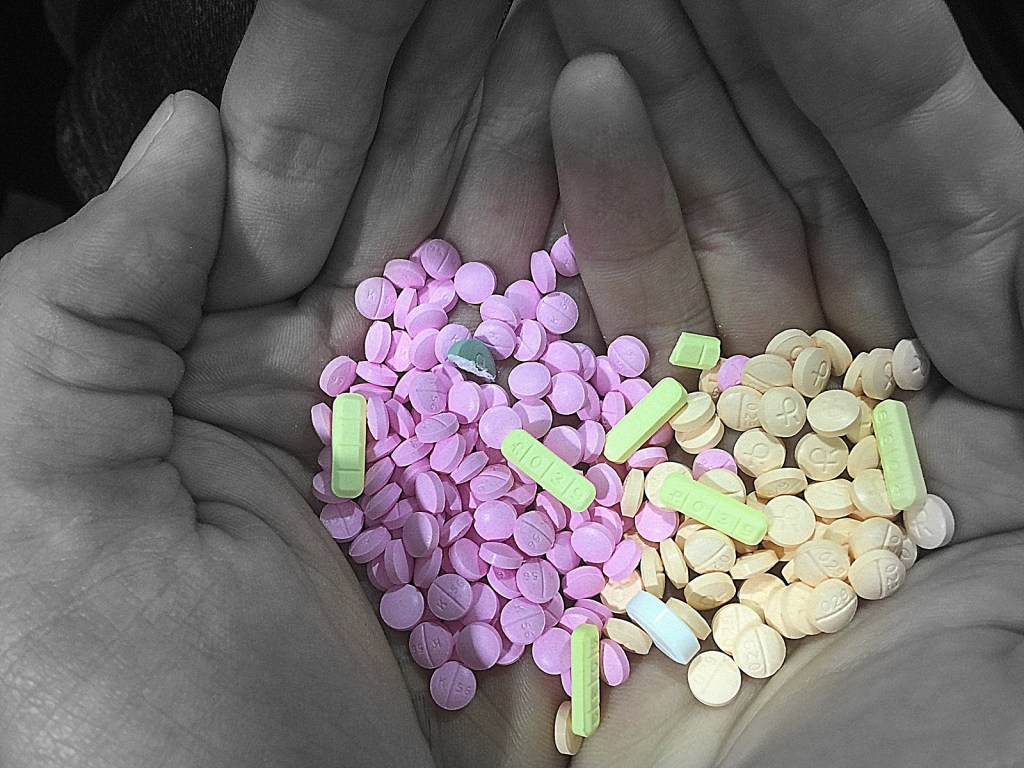
Outside the bounds of the regular news beat is the drug underground, the illegal world of dealings and substance abuse the general public understands through police reports, court filings and the occasional story of redemption. The legal ramifications of narcotics are well known, but less recognized is the scope and operation of the underground itself, which today exists mostly concealed in small towns and on county roads throughout the Ozarks.
The Salem News has conducted confidential interviews with former and active drug traffickers who have operated in Dent County in order to directly report on the reality of today’s drug culture. The names have been changed to protect their identities.
These sources say heroin and prescription opioids are today’s new top sellers. Prescription opioids are manufactured narcotic drugs such as OxyContin, Vicodin, Demerol and Percocet.
“Heroin and opioids are the number one seller in Salem,” Renn says. “Meth is still bad, don’t get me wrong, but the meth is more of an in-crowd thing and controlled by old heads who cook it way out in the woods. You have to go looking for it. But the heroin and pills are a free for all. If you’re partying you can’t get away from it. It’s actually harder to get marijuana than heroin right now because not as many people are looking for pot as much as the scripts (slang for prescription narcotics).”
Renn is a former drug trafficker who claims to have dealt in party drugs such as LSD, MDMA and prescription narcotics in the recent past.
Skip, another longtime dealer, confirms Renn’s description, saying prescription narcotics have acted as a gateway in creating the current heroin epidemic.
“What’s happened is a whole generation learned they could get high just by taking some pills out of their parent’s pill bottles,” Skip says. “When you’re young like I was it starts with you and your friends trying new things. Vicodin and OxyContin were things everyone found out they liked, so then it became a thing of how can we get it. Well after you’ve taken everything you can out of the medicine cabinet you have to go looking. Inevitably someone finds a way. I found a way, I met a guy.”
Skip says he has trafficked in everything from marijuana to ecstasy, but today only reluctantly deals in prescription narcotics to provide for a child. Skip claims to no longer operate in Dent County. His veracity was confirmed by possession of a large amount of prescription pills and a drug deal which was witnessed to have taken place.
“About five years ago two things started happening all at once,” Skip says. “First OxyContin was changed at a molecular level so it couldn’t be abused. You could no long snort it or break it up to melt down and shoot it with a needle. You can tell by seeing the pills went from having an OC to an OP label on them. The availability went down and the price of it then went way up, the price for the old pills or the ones that hadn’t been changed. So then suggestions started being made by those with connections, ‘Well you liked this so you should try this (heroin).’ Stuff like that. And oh, by the way, this stuff is way cheaper. Forty milligrams of Oxycodone will do exactly the same thing as a bean of heroin, the only difference really is price. Heroin is a lot cheaper.”
Roger, a former dealer who claims to have trafficked in drugs as hard as heroin and meth, agrees that heroin and prescription opioids now dominate.
“I’ve been saying for years I wish the tweakers (meth addicts) were back instead of these junkies,” Roger says. “The tweakers would at least stay to themselves. The junkies are always all over the place because they don’t know how up they are, they are the ones stealing everything to get high. There is no honor among junkies. They only care about getting high.”
Roger says another reason heroin is becoming so widespread is the United States prolonged involvement in Afghanistan.
“We invaded Afghanistan, where all the poppy is grown, and all the heroin has been made for hundreds of years, and all of a sudden we have a heroin problem, give me a break,” Roger says. “It’s coming back here. Somebody going over there is bringing it back. When you talked to the higher-ups it’s no mystery.”
Tony was a heavy user and small time dealer around the turn of the millennium and also attests to the sea change that has taken place over the past couple decades.
“There’ve been a lot of big changes in recent years, there’s been a big change from meth to scripts,” Tony says. “My drug experience is more than a decade in the past, so the world I existed in was a lot different. When I was using, alcohol was available, marijuana was plentiful and meth was bursting out. Today, from what I hear, it’s heroin and scripts that are big. As crazy as it may sound, I think the opioid abuse today is worse than the meth was. It’s no longer a situation of you have a certain group in town and they are the ones doing drugs. Today heroin is much more widespread and in homes meth never would have been.”
The High
“When you have no hope it’s more of a question of why not do it,” Renn says of the decision to turn to drugs. “There are no jobs here I am going to be able to do, and I’m not someone who’s ever going to college. America says I have to do this and that, and settle for minimum wage. But I’m better than that, I have more to offer the world than flipping burgers. When you have no hope, all you have is whatever your escape is. If your escape is to party then there’s no better escape than heroin.”
Renn claims to have a history of heroin abuse and shed light on the drug’s addictive quality.
“Heroin is like all systems go,” Renn says. “It is a level of happiness that is not achievable in normal life. That makes it a drug that’s easy to get carried away with. You can do it for two years and never realize.”
Roger, also a former heroin user, shed more light on the drug’s high.
“It’s way different than meth,” Roger says. “With meth you’re up for a few days and then you sleep for a few days, and then you leave it for a while. Heroin grabs you. Once you use it, you use it every day. It’s nothing like what a lot of people think it is. It’s not being strung out in bed every day. You wanna go out and you wanna do your normal stuff. It’s just all better. You don’t do drugs because they’re not fun. They are fun. You feel like Superman. That’s why you do them. Heroin takes away the pain, it feels good. But it’s never as good as the first time, and everybody is chasing it to get back to that level. Then after you start coming down, then you’re going to be in bed awhile. Coming down off heroin is the worst.”
Tony says the opioid epidemic spread after he left the drug scene, but as a former meth addict, Tony can attest to the decision-making that leads to hard drugs.
“In my own home, I was content to have my whiskey and beer and marijuana,” Tony says. “But then a friend comes over with some coke or some meth and you say that’s okay you can go over there and do that, I’m fine right here. But then you see them do it, and it’s just them snorting it, and they’re having fun, so you decide to try a little. Anytime a drug is available and a person is not afraid of it, they’re going to try it, and the more you’re around it the more desensitized you become.”
Skip has used heroin in the past and today still abuses prescription opioids.
“There’s not a dealer who is not a user first,” Skip says. “These things help you maintain. I couldn’t live my life without them, but I couldn’t afford them pulling minimum wage. I need help managing my anxiety and my pain. I think I’m like a lot of people. In my experience users are turning to drugs trying to self-medicate and failing. They have ADD or depression or they are bipolar. Drugs make all that go away. It may not be smart long-term but it’s cheap and it can be fun. It’s easier for me to maintain stability by selling half my prescription and coming out ahead at the end of the month than it would be for me to take a month off to get the $25,000 worth of treatment to address the root problem I can’t afford anyway.”
When questioned on making the choice to continue dealing, even after acknowledging how harmful abuse is for himself and the community, Skip says, “My logic is I have to survive. I’m still addicted, but I want to be a functional addict. I need three of these per day to function. Without them I wouldn’t be able to go to work or go to family functions or anything. I don’t have insurance, so how else am I supposed to afford them?”
The Black Market
“I’ve sold pills to teenagers and I’ve sold pills to grandmas,” Skip says. “Everyone is using. I think it has something to do with our culture and the idea that all your problems can disappear with a pill. But there are also the physical effects. If the decision is between getting sick and taking a pill you’re going to take the pill. Imagine the flu times 100, that’s what withdraws are like.”
Roger agrees that today’s demand for drugs transcends society’s traditional divisions.
“You wouldn’t believe how many people are using or who I’ve partied with,” Roger says. “It’s just a matter of who is hiding it best. Some people are just better at hiding it than others. They’re usually the ones with all the money.”
Skip says Dent County has a thriving black market fueled by locals buying heroin wholesale in nearby cities and distributing the drugs piecemeal to individuals within their social circles, or collecting pills locally and dealing them back out.
“I get my pills from a crooked doctor (outside of Dent County),” Skip says. “It’s kinda like a speakeasy in the old days. You’re given a (phone) number and told to make an appointment. When they ask who recommended you, you say the guy who clued you in. It’s that easy. When you show up the place is full of people just like you. You then go into his office and tell him exactly what you want, you are there for like a max of two minutes. Then you go to the pharmacy, and it’s all the same people there waiting for their script to get filled.”
Renn says that drug dealing is itself as addicting as the goods being trafficked.
“It’s awesome at first,” Renn says. “You’re making a lot of money and you’re making all your friends happy. That makes your confidence go way up and your pride, too. You can be your own boss. You also get high for free. That itself becomes addicting. When you can make $5,000 off a $1,000 investment guaranteed, how can you stop?”
The dealers say that once establishing a connection, trafficking is as simple transporting the drugs to their customers in Dent County.
“Whenever I move anything it was always either during lunch or right after five when everyone gets off work. The more cars there are the less likely you are to get pulled over,” Skip says. “If there was ever a big package getting moved it would also be transported in a convoy. You’d have three cars. The hot car would be in the middle with a car in front and back. That way it can’t be pulled over. If the worst were ever to happen we would prepare for that, too, by blending up the seeds and shake into an oil and rubbing it all over the cars. That way the drug dog will smell dope everywhere on the car and won’t be able to locate the package in any specific area.”
Ramifications
“You eventually end up getting burned in the end,” Renn says. “The longer you’re dealing the bigger a target you have on your head. You’ll end up getting robbed or losing all your money eventually. Once you get into the harder stuff there is a lot of violence. All of the people operating at that level are perpetually high on something. That world is full of people who have nothing to lose.”
Renn decided to quit abusing and trafficking after realizing it was a dead-end in life.
“It’s all short-lived,” Renn says. “You’re going to end up getting busted, getting hurt or overdosing eventually. One day I just realized I was living underground with no real connection and hiding from my family. How long can you live like that? I’d had enough.”
Roger says his participation in the underground has had long-term ramifications on his life.
“I haven’t been in trouble for almost a decade, but I still can’t get a job for stuff that happened years ago,” Roger says. “I can’t get a job. I can’t be on a lease. I can get Medicaid or food stamps or get loans for college. So what are you supposed to do when no place gives you opportunities? I haven’t been in trouble in years, yet the doors stay closed. I’ve been hired several places and gotten all the way through the interview process, but once they see you’re a felon you’re done. It’s a mark you can’t shake. No matter how far away you get, that reputation will always follow you.”
Skip says drugs have ruined much of his life, too.
“Drugs are the reason why I’ve lost all my friends and why some of them are dead now, including a family member who I was very close with,” Skip says. “I think I’m a very friendly person. I started out with a lot of friends and being popular. The deeper into drugs I got the more and more I lost connection to all those social circles. I just wanted to experience as much as possible, and once I found out I was lied to about how dangerous marijuana is I thought I was lied to about everything. That led me to try things I never should have messed with.”
Tony, unlike the other dealers, has managed to escape the drug underground relatively unscarred. Despite having harbored a cocaine and meth addiction, and trafficking in marijuana and mushrooms, Tony was never arrested on drug charges. With a clean record, Tony today has a family and hope for the future.
“I am very blessed,” Tony says. “Doors would not be open if I’d gotten caught. As a community we need to help others escape drug abuse before it’s too late. Dent County is a rough place for this problem, especially for young people. They are turning to drugs because they don’t think their lives will get any better, or just simply because they’re hopeless and bored. We have to do better, because if we do nothing it will be the lives of our children that will be lost.”
Epilogue
A report released this November by the Johns Hopkins Bloomberg School of Public Health details that throughout the 1990s drug makers, patient advocacy groups and pain specialists successfully lobbied state medical boards and legislatures to change statutes and regulations to lift any prohibition of opioid use for non-cancer pain. Since this change in prescribing policy, more than 100,000 people in the United States have died directly or indirectly from prescribed opioids abuse. Between 1980 and 2008, prescription drug abuse increased five-fold in the United States, making drug overdose the leading cause of injury death.
Purdue Pharma, the maker of OxyContin, was found guilty in 2007 of mislabeling their product and misleading regulators, doctors and patients about the drug’s risk of addiction and potential to be abused, according to contemporary court reports. As part of the settlement, the company was ordered to pay $600 million in fines and other payments. Three executives of Purdue Pharma, including its president and its top lawyer, also pleaded guilty as individuals to misbranding and agreed to pay a total of $34.5 million in fines. The New York Times reports between 1995 and 2001, OxyContin brought in $2.8 billion in revenue for Purdue Pharma. At one point, the drug accounted for 90 percent of the company’s sales.
Last year, the State of Kentucky filed a $1 billion lawsuit against Purdue Pharma for “misleading doctors by withholding information about the potential dangers of the drug and its relative ease to abuse.” The case is still in litigation.
Of the subjects interviewed as part of this investigation, all four reached similar conclusions to leave the underground and re-enter civil society. The three with non-violent criminal records have failed in that attempt, and today feel at life’s end despite not even reaching middle age.
Two are unemployed from not being hirable due to their non-violent criminal past, or not possessing the necessary work skills or education to keep a job. The third is employed in a minimum wage position in the service industry, but openly admits to small-time dealing to make ends meet.
All four have ambition, and today come across as earnest and intelligent. They all admit to sharing guilt in committing the same general crimes and using many of the same drugs. However, only the one who never got caught has been allowed to re-enter typical society.
In spite of these hardships, these subjects are lucky in having a second chance in comparison to those who will never leave the drug underground. According to the 2013 National Survey on Drug Use and Health, 2.1 million Americans are currently addicted to opioid pain relievers and 467,000 are addicted to heroin. In 2013, opioid analgesics were involved in 16,235 deaths, far exceeding deaths from any other drug or drug class, licit or illicit.